

How to Price Smoke Shop Products for Profit Without Losing Customers
The biggest mistake smoke shop owners make
Most retailers fall into one of two traps:
- Pricing too low and killing their margins
- Pricing too high and losing loyal customers
In 2026, smart pricing isn’t about being the cheapest.
It’s about being strategic.
If you understand psychology, margin structure, and customer behavior, you can increase profit without scaring customers away.
Let’s break it down.
Step 1: Know Your Real Cost (Not Just Wholesale Price)
Many retailers only calculate:
Wholesale cost = Selling price + small markup
That’s incomplete.
Your real cost includes:
- Wholesale purchase price
- Shipping or freight
- Credit card processing fees
- Staff costs
- Rent and utilities
- Damaged or unsold inventory
If you ignore overhead, you underprice.
Simple formula:
True cost per item = (Total monthly overhead ÷ total units sold) + wholesale cost
This gives you your actual break-even point.
Step 2: Understand Margin Targets by Category
Not all smoke shop products should carry the same margin.
Here’s a healthy 2026 margin guideline:
| Product Category | Recommended Margin |
|---|---|
| Disposable Vapes | 20–35% |
| Glass Products | 40–65% |
| Rolling Papers | 35–50% |
| Grinders & Tools | 45–60% |
| Kratom Products | 30–50% |
| Nicotine Pouches | 15–25% |
Low-margin items bring traffic.
High-margin items build profit.
Balance is key.
Step 3: Stop Competing on Price Alone
Customers don’t always choose the cheapest option.
They choose:
- Convenience
- Trust
- Authenticity
- Product knowledge
- Store experience
If your shop:
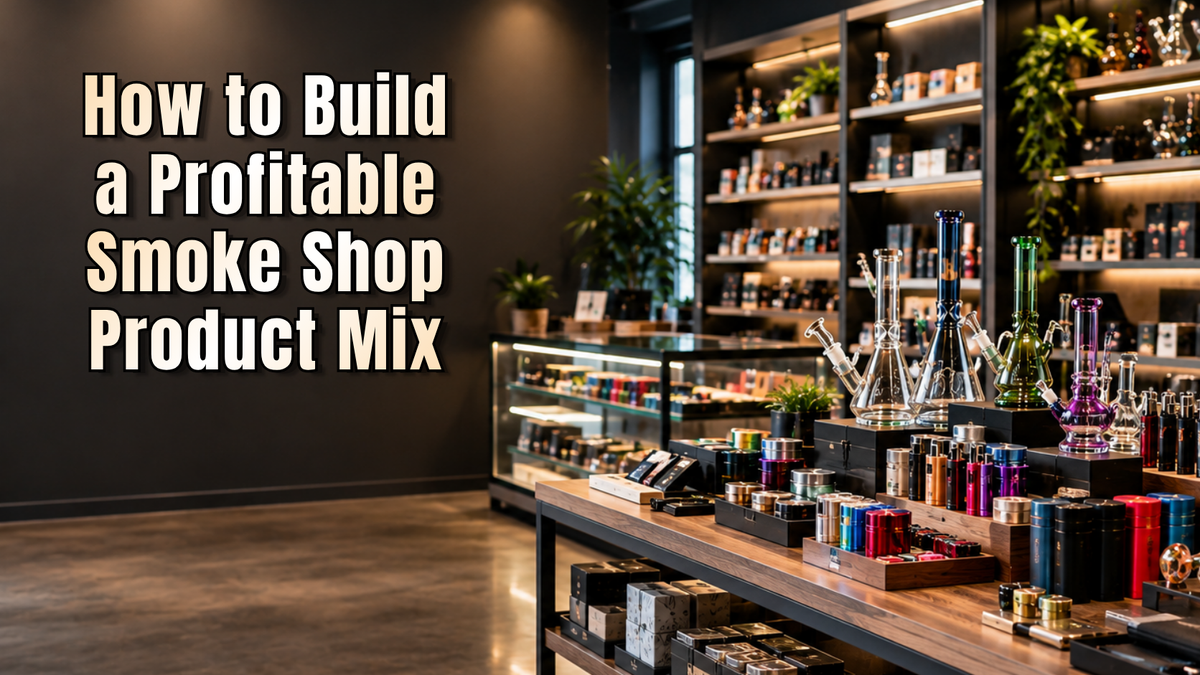
- Has good lighting
- Clean displays
- Knowledgeable staff
- Authentic inventory
You can charge slightly more than discount competitors.
Competing purely on price leads to a race to the bottom.
Step 4: Use Psychological Pricing
Retail psychology increases conversion without lowering prices.
Proven strategies:
Charm Pricing
$19.99 feels cheaper than $20.00
Good-Better-Best Strategy
Offer three price tiers:
- Budget
- Mid-tier
- Premium
Most customers choose mid-tier.
Bundle Pricing
Instead of discounting one item:
Glass pipe ($40)
Cleaner ($10)
Bundle price: $45
Customer feels savings.
You increase total sale.
Step 5: Watch Competitors | But Don’t Copy Them
Check local competitors for:
- Top-selling vape pricing
- Popular glass pieces
- Kratom pricing
But don’t blindly match.
If your store offers:
- Better layout
- More selection
- Trusted brands
- Better service
You can price slightly higher.
Customers pay for reliability.
Step 6: Use Strategic “Loss Leaders”
Some products should be aggressively priced to drive traffic.
Examples:
- Popular disposable vape brands
- Best-selling rolling papers
Keep margins tight here.
Then increase margins on:
- Glass
- Accessories
- Add-ons
- Cleaning supplies
This increases average ticket size.
Step 7: Train Staff to Increase Value, Not Discount
If customers say:
“Can you do better on the price?”
Staff should respond with value, not price cuts.
Example:
“This one costs a bit more because the glass is thicker and lasts longer.”
Value justification protects margin.
Discounting destroys it.
Step 8: Adjust Prices Based on Data
Track:
- Fast movers
- Slow sellers
- Seasonal spikes
- Repeat purchases
If something sells out constantly, your price might be too low.
If something sits for months, it might be priced too high.
Pricing is dynamic | not permanent
Step 9: Avoid the Hidden Margin Killers
Be careful of:
- Excessive discounting
- Unplanned sales
- Matching online-only prices
- Overstocking slow products
Every discount should have a purpose.
If you discount often, customers wait for sales instead of buying at full price.
The Real Secret: Profit Is Made in Accessories
Many smoke shop owners focus too much on big-ticket items.
But profit is often in:
- Lighters
- Cleaners
- Extra bowls
- Rolling trays
- Grinders
Encourage add-ons at checkout.
That’s where margins stack up.
Final Thoughts: Price With Confidence
You don’t need to be the cheapest store in town.
You need to be:
- Fair
- Strategic
- Consistent
- Confident
Smart pricing in 2026 means:
Balancing margin + psychology + customer trust.
Retailers who master this increase revenue without increasing foot traffic.
And that’s sustainable growth.



Leave a comment
This site is protected by hCaptcha and the hCaptcha Privacy Policy and Terms of Service apply.